Inicio  /  Insights  /  La IA Encuentra Vulnerabilidades Más Rápido que Tu EquipoAI Finds Vulnerabilities Faster Than Your Team

La IA Encuentra Vulnerabilidades Más Rápido que Tu Equipo AI Finds Vulnerabilities Faster Than Your Team

La IA Encuentra Vulnerabilidades Más Rápido que Tu Equipo

IA Rompe tu Código

La IA ya escanea tu software en minutos — y no le importa si tienes un equipo de seguridad.

[DATO REAL]: En febrero de 2025, Thomas Ptacek — cofundador de Matasano Security, 25 años rompiendo sistemas por oficio — publicó “Vulnerability Research Is Cooked”. Su argumento: los LLMs ya encuentran vulnerabilidades reales a velocidad y escala que ningún equipo humano puede igualar. Cuando alguien así lo dice, prestas atención.

En este artículo vas a:

  • Entender por qué el modelo mental de “nadie va a encontrar ese bug” está muerto
  • Ver evidencia real: qué encontró Claude, qué automatizó OpenAI, qué colapsó el kernel de Linux
  • Aprender las nuevas reglas del juego antes de que alguien las use contra ti
  • Implementar escaneo automatizado de seguridad en tu CI/CD esta semana

01 EL PROBLEMA REAL

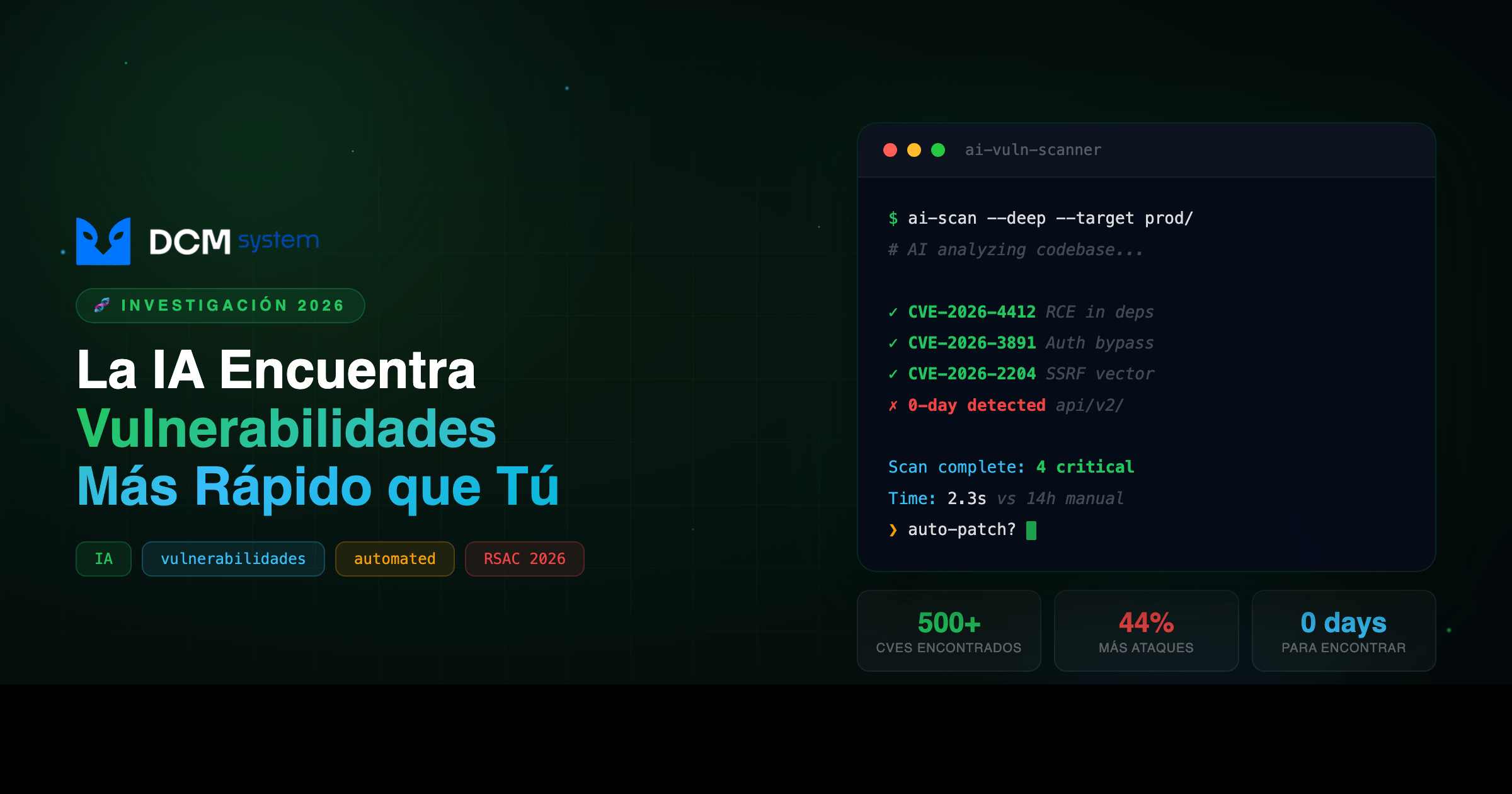
Un modelo de IA puede analizar un repositorio completo en minutos. No descansa, no se distrae, no cobra por hora. Anthropic reportó que Claude descubrió más de 500 vulnerabilidades en proyectos open-source ampliamente usados — buffer overflows, race conditions, inyecciones SQL, fallos de autenticación. No bugs triviales. Software que millones de personas usan cada día.

OpenAI construyó “Aardvark”, un pentester automatizado que le pasa un codebase al modelo y deja que busque fallos sistemáticamente. Un investigador senior revisa 500–1000 líneas por hora. Aardvark analiza repositorios completos en minutos.

IBM X-Force reportó un aumento del 44% en ataques vía aplicaciones públicas. RSAC 2026 — el evento de ciberseguridad más importante del mundo — estará dominado por un solo tema: IA aplicada a seguridad ofensiva. No es el futuro. Es ahora.

PIÉNSALO ASÍ

Antes, encontrar el bug oculto en tu código era como buscar una aguja en un pajar — requería semanas de un experto con café y paciencia. Ahora, la máquina pasa un imán por todo el pajar en cinco minutos y encuentra todas las agujas.

Antes El costo Después
Semanas de auditoría manual El mismo bug Minutos de escaneo automatizado
Pocos atacantes calificados Tu endpoint expuesto Herramientas al alcance de cualquiera
“Nadie va a encontrar eso” Suposición válida Suposición que te va a costar caro

02 POR QUÉ PASA

Hay dos fuerzas actuando al mismo tiempo y se refuerzan mutuamente.

Primera: la IA democratizó las herramientas ofensivas. Antes necesitabas años de expertise para hacer pentesting serio. Hoy, un fuzzer inteligente basado en LLM genera payloads contextuales, analiza respuestas, detecta blind SQLi y variantes que un scanner tradicional no vería — todo en minutos, sin conocimiento experto de quien lo corre.

Segunda: la misma IA que encuentra vulnerabilidades también las crea. El código generado por LLMs tiene patrones predecibles: inyecciones SQL, secrets hardcodeados, criptografía débil, dependencias inventadas. Tu equipo genera código más rápido con IA, pero ese código tiene más superficie de ataque. Y los atacantes ya usan IA para escanearlo.

El resultado: la ventana entre “bug introducido” y “bug explotado” se redujo de meses a días u horas. Es una carrera armamentista. Si no estás del lado correcto, pierdes.


03 LA SOLUCIÓN

Hay que voltearse la ecuación: usar la misma IA que ataca para defenderte antes de que alguien más llegue.

Pero hay una trampa que nadie anticipó. Si la IA encuentra vulnerabilidades más rápido, eso significa más reportes. Muchos más. Y el ecosistema no estaba preparado.

Daniel Stenberg — creador de cURL, probablemente la herramienta de línea de comandos más utilizada en la historia — lo vivió en carne propia. La cantidad de reportes de vulnerabilidades se multiplicó. El problema: la gran mayoría son basura. Reportes generados por IA que suenan convincentes, tienen formato profesional, citan CVEs reales… y están completamente equivocados. El modelo alucina una vulnerabilidad con la confianza de un experto. Los mantenedores — que trabajan gratis en su tiempo libre — gastan horas verificando falsos positivos.

Los mantenedores del kernel de Linux enfrentan el mismo problema multiplicado por cien. Algunos reportes son reales y valiosos. Pero separarlos del ruido requiere el mismo expertise que se necesitaba para encontrar los bugs. Más señal útil, sí. Pero también exponencialmente más ruido.

La solución correcta no es solo correr más scanners — es integrarlos en tu proceso con supervisión humana que filtre el ruido y actúe sobre lo real.

El enfoque que funciona: escaneo automatizado en cada commit, revisión de ingenieros con criterio de negocio, fuzzing de APIs antes de cada release, auditoría de dependencias, y threat modeling actualizado trimestralmente que incluya vectores de IA.


04 CÓMO IMPLEMENTARLO

  1. Agrega escaneo de seguridad a tu CI/CD — esta semana, no en el próximo sprint:
# .github/workflows/security.yml
name: Security Gate
on: [push, pull_request]

jobs:
  security-scan:
    runs-on: ubuntu-latest
    steps:
      - uses: actions/checkout@v4

      # SAST — análisis estático
      - name: Semgrep
        uses: returntocorp/semgrep-action@v1
        with:
          config: >-
            p/owasp-top-ten
            p/javascript
            p/typescript

      # Dependencias vulnerables
      - name: Audit dependencies
        run: npm audit --audit-level=high

      # Secrets que no deben estar en el repo
      - name: Gitleaks
        uses: gitleaks/gitleaks-action@v2
        env:
          GITHUB_TOKEN: ${{ secrets.GITHUB_TOKEN }}

      # Si CUALQUIERA falla, el PR no se mergea
  1. Audita tu superficie de ataque pública. Haz un inventario de cada endpoint, subdominio y servicio expuesto a internet. Si no sabes qué tienes afuera, no puedes defenderlo:
# Descubrimiento de subdominios
subfinder -d tudominio.com -o subdominios.txt

# Escaneo de puertos
nmap -sV -sC -oN scan_results.txt tudominio.com

# Fuzzing de endpoints
ffuf -w /usr/share/wordlists/common.txt \
  -u https://tudominio.com/FUZZ \
  -mc 200,301,302,403
  1. Revisa el código generado por IA con lupa. Cada pieza que sale de un LLM pasa por revisión humana con criterio de seguridad. El patrón más común que la IA introduce: concatenación de strings en SQL. Este endpoint parece funcional y pasa tests básicos — pero está roto:
// Código generado por IA — vulnerable a SQLi
app.get('/api/search', (req, res) => {
  const { query, category } = req.query;
  const sql = `SELECT * FROM products
    WHERE name LIKE '%${query}%'
    AND category = '${category}'`;
  db.query(sql, (err, results) => res.json(results));
});

Un fuzzer con IA lo encuentra en menos de cinco minutos. No necesitas ser hacker elite para correrlo.

  1. Actualiza tu modelo de amenazas. Si el último tiene más de 6 meses, está desactualizado. Incluye: IA como vector de ataque (fuzzing automatizado), IA como fuente de vulnerabilidades (código sin revisión), supply chain attacks potenciados por IA, y phishing hiper-personalizado.

  2. Entrena a todo el equipo, no solo a los devs. El 90% de los breaches empiezan con un humano haciendo click donde no debía.

  3. Mide el MTTR. Mean Time To Remediate. Ya no se trata de si van a encontrar un bug. Se trata de qué tan rápido lo parcheas.


05 ¿ES PARA TI?

Sí, si tu empresa:

  • ✅ Tiene software en producción con endpoints públicos (API, app web, servicios)
  • ✅ Usa IA para generar código o automatizar desarrollo
  • ✅ Todavía asume que “nadie va a encontrar ese bug” porque la ruta no es obvia

No, si:

  • ❌ No tienes ningún sistema expuesto a internet — sin superficie pública, el riesgo es menor
  • ❌ Ya tienes escaneo automatizado en CI/CD, fuzzing periódico y threat modeling trimestral — vas bien, esto es confirmación, no novedad

Preguntas frecuentes

¿El escaneo automatizado reemplaza una auditoría de seguridad profesional? No. El escaneo automatizado encuentra lo que tiene patrones conocidos — OWASP Top 10, dependencias vulnerables, secrets expuestos. Una auditoría profesional encuentra fallos de lógica de negocio, vulnerabilidades de arquitectura y combinaciones de issues que solo un humano con contexto puede ver. Son complementarios, no sustitutos.

¿Es legal que la IA escanee mi propio código buscando vulnerabilidades? Sí, en tu propio código y en código open-source. El límite legal está en escanear sistemas de terceros sin autorización. Herramientas como Semgrep, CodeQL o Gitleaks en tu CI/CD son completamente legítimas y recomendadas.

¿Qué hago si el scanner reporta muchos falsos positivos? Esto es exactamente el problema que enfrentó el kernel de Linux con reportes generados por IA. La clave es configurar las reglas del scanner para tu contexto específico y asignar a alguien con criterio técnico para el triage — no delegar el triage al mismo que escribe el código.


Acción inmediata: Agrega Gitleaks a tu repo hoy. Tarda menos de 15 minutos y te dice inmediatamente si hay secrets expuestos en tu historial de commits — el tipo de vulnerability que más impacto tiene y menos tiempo toma encontrar.

¿Quieres que revisemos tu pipeline de seguridad? → Habla con DCM

AI Breaks Your Code

AI is already scanning your software in minutes — and it does not care whether you have a security team.

[REAL DATA]: In February 2025, Thomas Ptacek — co-founder of Matasano Security, with 25 years of breaking systems for a living — published Vulnerability Research Is Cooked. His argument: LLMs already find real vulnerabilities at a speed and scale no human team can match. When someone like that says it, you listen.

In this article you will:

  • Understand why the mental model of “nobody is going to find that bug” is dead
  • See real evidence: what Claude found, what OpenAI automated, what stretched the Linux kernel team
  • Learn the new rules of the game before someone uses them against you
  • Implement automated security scanning in your CI/CD this week

01 THE REAL PROBLEM

An AI model can analyze an entire repository in minutes. It does not rest, does not get distracted, does not bill by the hour. Anthropic reported that Claude uncovered more than 500 vulnerabilities in widely used open-source projects — buffer overflows, race conditions, SQL injections, authentication failures. Not trivial bugs. Software that millions of people use every day.

OpenAI built Aardvark, an automated pentester that hands a codebase to the model and lets it look for flaws systematically. A senior researcher reviews 500 to 1,000 lines per hour. Aardvark analyzes entire repositories in minutes.

IBM X-Force reports a 44% increase in attacks targeting public-facing applications. RSAC 2026 — the most important cybersecurity event in the world — will be dominated by a single theme: AI applied to offensive security. This is not the future. It is now.

THINK OF IT THIS WAY

Before, finding the hidden bug in your code was like searching for a needle in a haystack — it required weeks of an expert with coffee and patience. Now the machine runs a magnet across the entire haystack in five minutes and finds every needle.

Before The cost After
Weeks of manual auditing The same bug Minutes of automated scanning
Few qualified attackers Your exposed endpoint Tools available to anyone
“Nobody will find that” A reasonable assumption An assumption that is going to cost you

02 WHY IT HAPPENS

Two forces are at work at the same time, and they reinforce each other.

First: AI has democratized offensive tooling. You used to need years of expertise to do serious pentesting. Today, an LLM-powered intelligent fuzzer generates contextual payloads, analyzes responses, detects blind SQLi and variants a traditional scanner would miss — all in minutes, with no expert knowledge required from the operator.

Second: the same AI that finds vulnerabilities also creates them. Code generated by LLMs carries predictable patterns: SQL injections, hardcoded secrets, weak cryptography, fabricated dependencies. Your team produces code faster with AI, but that code has more attack surface. And attackers already use AI to scan it.

The result: the window between “bug introduced” and “bug exploited” has shrunk from months to days or hours. It is an arms race. If you are not on the right side, you lose.


03 THE SOLUTION

The equation must be flipped: use the same AI that attacks to defend yourself before someone else gets there first.

But there is a trap nobody anticipated. If AI finds vulnerabilities faster, that means more reports. Many more. And the ecosystem was not ready.

Daniel Stenberg — creator of cURL, probably the most widely used command-line tool in history — has lived through it. The volume of vulnerability reports has multiplied. The problem: the vast majority are noise. Reports generated by AI that sound convincing, look professionally formatted, cite real CVEs… and are completely wrong. The model hallucinates a vulnerability with the confidence of an expert. Maintainers — who often work for free in their spare time — spend hours verifying false positives.

Linux kernel maintainers face the same problem multiplied by a hundred. Some reports are real and valuable. But separating them from the noise requires the same expertise it once took to find the bugs in the first place. More useful signal, yes. Also exponentially more noise.

The right answer is not simply running more scanners — it is integrating them into a process with human oversight that filters the noise and acts on what is real.

The approach that works: automated scanning on every commit, review by engineers with business context, fuzzing of APIs before each release, dependency auditing, and threat modeling refreshed quarterly to include AI vectors.


04 HOW TO IMPLEMENT IT

  1. Add security scanning to your CI/CD — this week, not next sprint:
# .github/workflows/security.yml
name: Security Gate
on: [push, pull_request]

jobs:
  security-scan:
    runs-on: ubuntu-latest
    steps:
      - uses: actions/checkout@v4

      # SAST — static analysis
      - name: Semgrep
        uses: returntocorp/semgrep-action@v1
        with:
          config: >-
            p/owasp-top-ten
            p/javascript
            p/typescript

      # Vulnerable dependencies
      - name: Audit dependencies
        run: npm audit --audit-level=high

      # Secrets that should not be in the repo
      - name: Gitleaks
        uses: gitleaks/gitleaks-action@v2
        env:
          GITHUB_TOKEN: ${{ secrets.GITHUB_TOKEN }}

      # If ANY check fails, the PR does not merge
  1. Audit your public attack surface. Inventory every endpoint, subdomain, and service exposed to the internet. If you do not know what you have outside, you cannot defend it:
# Subdomain discovery
subfinder -d yourdomain.com -o subdomains.txt

# Port scanning
nmap -sV -sC -oN scan_results.txt yourdomain.com

# Endpoint fuzzing
ffuf -w /usr/share/wordlists/common.txt \
  -u https://yourdomain.com/FUZZ \
  -mc 200,301,302,403
  1. Review AI-generated code with a magnifying glass. Every piece that comes out of an LLM passes through human review with a security lens. The most common pattern AI introduces: string concatenation in SQL. The endpoint below looks functional and passes basic tests — but it is broken:
// AI-generated code — vulnerable to SQLi
app.get('/api/search', (req, res) => {
  const { query, category } = req.query;
  const sql = `SELECT * FROM products
    WHERE name LIKE '%${query}%'
    AND category = '${category}'`;
  db.query(sql, (err, results) => res.json(results));
});

An AI-powered fuzzer finds it in less than five minutes. You do not need to be an elite hacker to run one.

  1. Update your threat model. If your last one is more than six months old, it is out of date. Include: AI as an attack vector (automated fuzzing), AI as a source of vulnerabilities (unreviewed code), AI-amplified supply chain attacks, and hyper-personalized phishing.

  2. Train the entire team, not just the developers. Ninety percent of breaches start with a human clicking where they should not have.

  3. Measure MTTR. Mean Time To Remediate. The question is no longer whether they will find a bug. It is how fast you can patch it.


05 IS THIS FOR YOU?

Yes, if your company:

  • ✅ Has software in production with public endpoints (API, web app, services)
  • ✅ Uses AI to generate code or automate development
  • ✅ Still assumes “nobody will find that bug” because the route is not obvious

No, if:

  • ❌ You have no system exposed to the internet — without a public surface, the risk is lower
  • ❌ You already run automated scanning in CI/CD, periodic fuzzing, and quarterly threat modeling — you are doing well; this is confirmation, not news

Frequently asked questions

Does automated scanning replace a professional security audit? No. Automated scanning finds what has known patterns — OWASP Top 10, vulnerable dependencies, exposed secrets. A professional audit finds business-logic flaws, architectural vulnerabilities, and combinations of issues only a human with context can see. They are complementary, not substitutes.

Is it legal for AI to scan my own code looking for vulnerabilities? Yes — in your own code, and in open-source code. The legal limit is scanning third-party systems without authorization. Tools like Semgrep, CodeQL, or Gitleaks in your CI/CD are entirely legitimate and recommended.

What do I do if the scanner reports too many false positives? That is exactly the problem the Linux kernel team faces with AI-generated reports. The key is to tune the scanner’s rules for your specific context and assign someone with technical judgment to triage — do not delegate triage to whoever wrote the code.


Immediate action: Add Gitleaks to your repo today. It takes less than 15 minutes and tells you immediately whether secrets are exposed in your commit history — the type of vulnerability with the highest impact and the lowest cost to find.

Want us to review your security pipeline? → Talk to DCM

Tu proyecto merece ingenieros reales

Your project deserves real engineers

12+ años construyendo software seguro. Hablemos sobre lo que necesitas.

12+ years building secure software. Let's talk about what you need.

Iniciar Conversación Start Conversation